

MeshOS · Energy management system
Never breach your grid contract again
One quarter-hour above your contracted capacity is expensive. In the Netherlands it sets your peak charge and raises the contracted level for the rest of the year; in Poland the ten worst quarter-hours of the month are each billed at the capacity rate. And with the grid full, a bigger connection is often not on offer. Peak shaving in MeshOS plans your battery and flexible loads a day ahead on real day-ahead prices, then watches the main meter every 30 seconds and raises battery discharge the moment load crosses the limit.
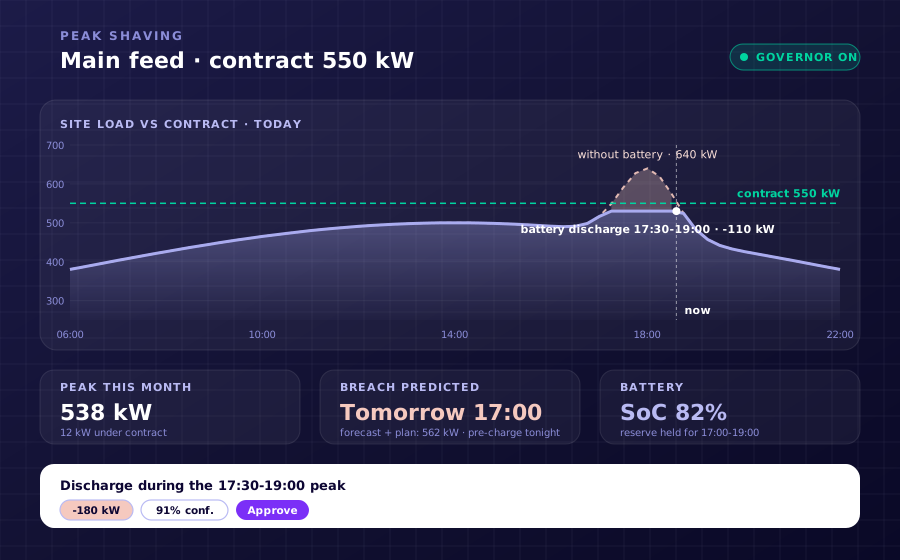
The grid is full, and your contract is the ceiling
Grid congestion means you probably cannot buy more capacity, so the contract you have is the capacity you have. Most factories manage that ceiling by hoping:
A contract is a number, and a number can be managed: measure the load against it, plan under it, and act the moment you are about to cross it.
Three layers between your load and the limit
Peak shaving is not one trick. It is a plan for tomorrow, a correction right now, and a warning hours ahead. Each layer catches what the previous one missed.
No battery? The plan and the predictions still work, and the action becomes a shifted job or a switched load instead of a discharge.
Where this fits
Peak shaving is the acting layer of one system
The plan, the governor and the cards on this page are the last of four stages. They run on the meters, the forecast and the cost model described on the energy management system page.
Action cards with the money on them
Every proposal arrives as a card with the kW, the euros, the confidence and the evidence, and you approve or deny it. Six kinds:
Honest about control: what the system will not do
Peak shaving means commanding hardware, and hardware commanded on bad data is worse than no control. So a few rules are fixed in the software and not in a setting.
Every site starts read-only. Advisory mode means a person approves each card. Automatic mode acts within a safety floor you set. In every mode:
You will see the battery do less than a demo promises. What it does, you can defend to the grid operator.
- No fresh main-meter reading (under two minutes old) means no charging and no live shaving. Only the approved discharge plan continues.
- No authentic day-ahead price means no plan for that day. The system never synthesises a price.
- Without an approved plan, automatic mode may only discharge to protect the contract. It never starts charging on its own.
- The battery's state-of-charge floor is absolute: discharge stops there even if the peak is not covered.
- Every command is logged with the headroom it was based on, for two years. Every approval, denial and revert is on the record with a name and a time.
Works with your battery, your meters and your contract
The plan and the governor need three things: the main meter, the battery's management system, and your contract limit and tariff.
Batteries are connected through their BMS over REST or Modbus; the main meter is read by the edge device. If the meter sits behind the battery, the battery's own power is subtracted so the grid draw is what is judged.
What goes into the site profile:
If any of that is missing, the related number shows 'not estimated' rather than a guess.
- Contracted capacity in kW and the safety margin you want under it.
- Tariff regime: Dutch monthly peak or Polish ten worst quarter-hours, with your rates.
- Battery capacity, power, efficiency, cycle cap and the state-of-charge floor.
- Governance mode: read-only, advisory or automatic within a safety floor.
Start read-only, act when you trust it
The safest way in is to let the system plan and predict for a few weeks before it commands anything.
Step 1: main meter and contract
The edge device reads the main feed; contract limit and tariff go into the site profile. Peak alerts and breach predictions start.
Step 2: the plan runs read-only
Every day a battery plan is made and compared with what actually happened. You see what it would have saved.
Step 3: advisory mode
Cards arrive; you approve the ones you agree with. Realised savings are settled on measured samples.
Step 4: automatic within your floor
Once the ledger shows plan and reality agree, switch to automatic for the hours and floor you choose.
Proof from the field
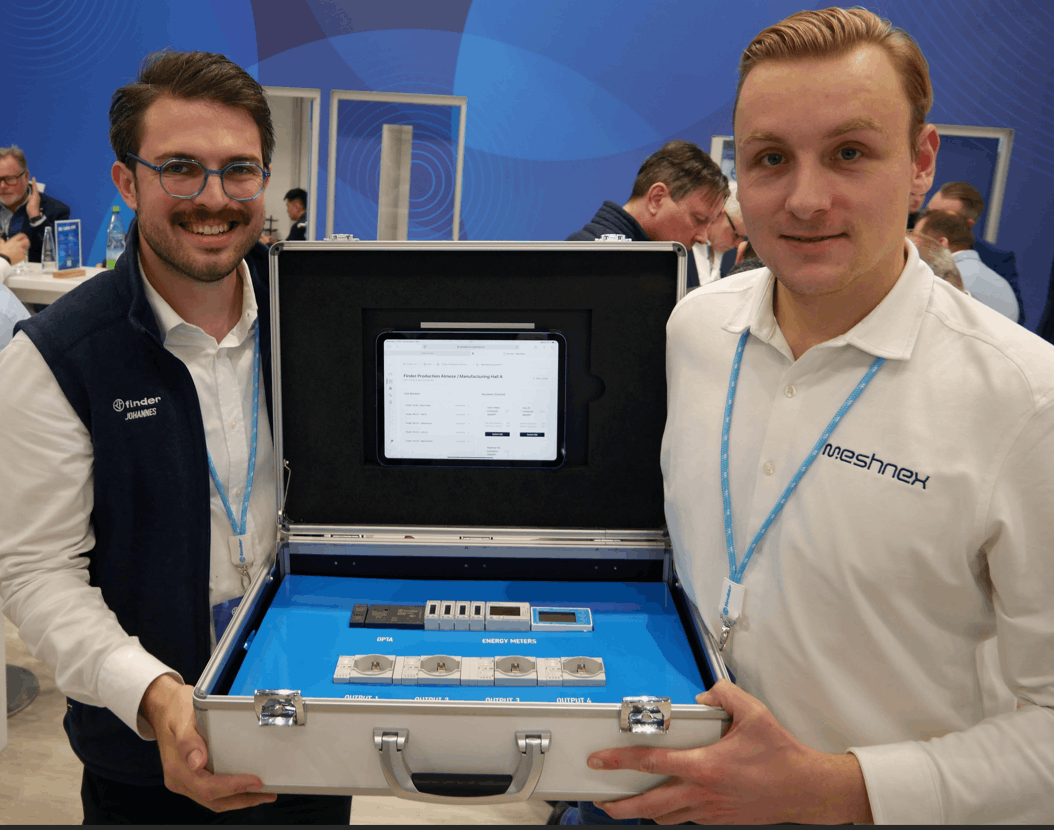
Peak shaving in practice
Real meters, real dashboards.
 Energy monitoring
 Energy data that writes its own audit report
Sub-metering on the main consumers, one dashboard with kWh per line and per batch, and audit-ready ISO 50001 and CSRD reports generated from live data instead of a yearly spreadsheet scramble. The auditor's letter stopped being a fire drill.
Frequently asked questions about peak shaving
Does peak shaving work without a battery?
Partly. The peak alerts, breach predictions and load-shift cards work without one, and switching a non-critical load off is a valid action. What you lose is the seconds-level correction: only a battery can cover a peak that is already happening.
How fast does the live governor react?
The control loop runs every 30 seconds and raises discharge as soon as the main meter shows negative headroom. In a test run a 640 kW peak was brought under a 550 kW contract in about two minutes. The battery's own ramp rate is the limit.
What if the forecast is wrong?
The plan keeps a peak reserve in the battery for the hours where demand is predicted near the limit, and the live governor corrects on the real meter regardless of the forecast. A bad forecast costs you some arbitrage, not a breach.
Can it lower our contract?
It can tell you whether that is wise. The contract review card compares the cost of your current breaches with the cost of a higher contract, and the backtest shows what last month would have cost with the optimised profile. The decision stays with you.
Does it work in Poland and the Netherlands?
Yes. The tariff model knows both regimes: the Dutch monthly peak that raises the contracted level for the rest of the year, and the Polish rule that bills the ten largest quarter-hour overruns of the month. Rates come from your own contract.
Where do the savings numbers come from?
Planned savings from the forecast times delivered prices; realised savings from measured battery samples at the same prices, per day. A day with less than 90% of the samples is marked as an estimate. Avoided capacity charges are shown separately, because they settle monthly.
Send us your worst quarter-hour
The invoice shows the peak and the date. We tell you what it cost under your regime and what a battery or a shifted job would have done with it.