

Who we serve
Manufacturing digitalization: turn factory data into daily decisions
Most factories are already digital in some form. Machines have PLCs, sensors measure continuously and ERP or MES systems contain orders, counts and planning. Yet daily production can still feel surprisingly manual. Downtime is entered in Excel after the shift, operators copy values from machine displays and the morning meeting starts with a discussion about which numbers are actually correct. Manufacturing digitalization is not about adding one more system: it is about making the data you already have available in time for the people who need to act on it. You do not have to start with a factory-wide transformation. Start with the problem that costs the most today.
Manufacturing digitalization starts with one question: what is happening now?
Manufacturers rarely suffer from a lack of data. The problem is that the data is scattered across machines, PLCs, spreadsheets and separate systems. The factory knows a lot, but that knowledge often only becomes visible after someone manually collects it.
A useful digitalization project removes those handovers. Machine data is collected automatically, given context and shown while someone can still do something about it. That is when production digitalization moves from reporting what happened to steering what happens next.
- Production managers only see where capacity was lost after the shift is over.
- Operators log stops or quality checks manually, so information is incomplete or arrives too late.
- Maintenance sees alarms and breakdowns, but not always the pattern across weeks or months.
- Management receives reports without the live context behind the numbers.
- IT manages multiple data sources, each with its own protocol, structure and access model.
From scattered machine data to one view of production
With MeshOS, Meshnex creates a data layer between the factory floor and the people running the plant. Existing PLCs, sensors, machines and data sources stay in place. MeshOS reads the available data, structures it and links it to the right machine, line, shift or event.
That turns raw data into usable information. An error code is no longer just "ERR_07"; it becomes an event on a specific machine, at a specific time and in the context of a production run. That context is essential for dashboards and analysis, and it becomes even more important when you want to add automated reporting, predictive maintenance or AI.
MeshOS is not a traditional MES that has to replace the systems you already use. It works alongside them and fills the gap between the machines and the information production, management and IT need every day. Connections to the factory floor are read-only by default, so gaining visibility does not mean introducing a new system that starts controlling your process.
What production digitalization delivers in practice
Digitalizing production without stopping the factory
Digitalization becomes unnecessarily heavy when it is treated as one large IT project. A factory does not have to replace every machine, standardize every system or wait months for a completely new platform before value appears. Meshnex works from the environment that is already there.
In many situations, the first live data can be visible within 48 hours after a machine or line is connected. From there the setup grows step by step. Start with one dashboard or use case, then connect more machines, lines or modules once the value is proven. The shared data layer is already in place, so each next step does not have to start from zero.
Deployment can also match the factory's IT requirements. MeshOS can run in the cloud on European servers, in a hybrid setup or fully self-hosted on your own infrastructure. That keeps industrial digitalization a joint effort between production and IT, instead of a solution imposed by one department on the other.
For every role
One data foundation, different questions
The same production data has different value for different roles. Management, production and IT look at the same factory from different perspectives.
The advantage is that these roles do not have to build separate versions of the truth. They work from the same data foundation, presented in the way that fits their work.
From a dashboard to a smarter production process
A dashboard is often the first visible step, but not the end goal. Structured production data can feed automated shift reports, surface deviations through alerts and give AI the context it needs to recognize patterns.
With AI knowledge retention, manuals, alarm logs and years of practical knowledge can also become searchable for technicians and operators. Digitalization is not only about connecting machines; it is also about making the right information available at the right moment.
Where should you start with manufacturing digitalization?
Do not start with the technology. Start with one concrete loss or recurring question. That makes the result measurable and avoids a project where a lot of data is connected but little actually changes.
Step 1: choose where the loss is
Choose a machine, line or process where time, capacity or manual work is being lost today.
Step 2: name the missing information
Define the information you are currently missing: downtime, OEE, quality, energy, maintenance or records.
Step 3: connect what is already there
Connect the existing data sources and make the first information visible live.
Step 4: find patterns, then expand
Use the first weeks to find patterns and test improvement actions. Expand once the first step has shown clear value. That keeps the first step small while the data foundation can grow across machines, sites and AI use cases.
Client cases
How factories start
Three projects that began with one machine or one loss, on existing installations.
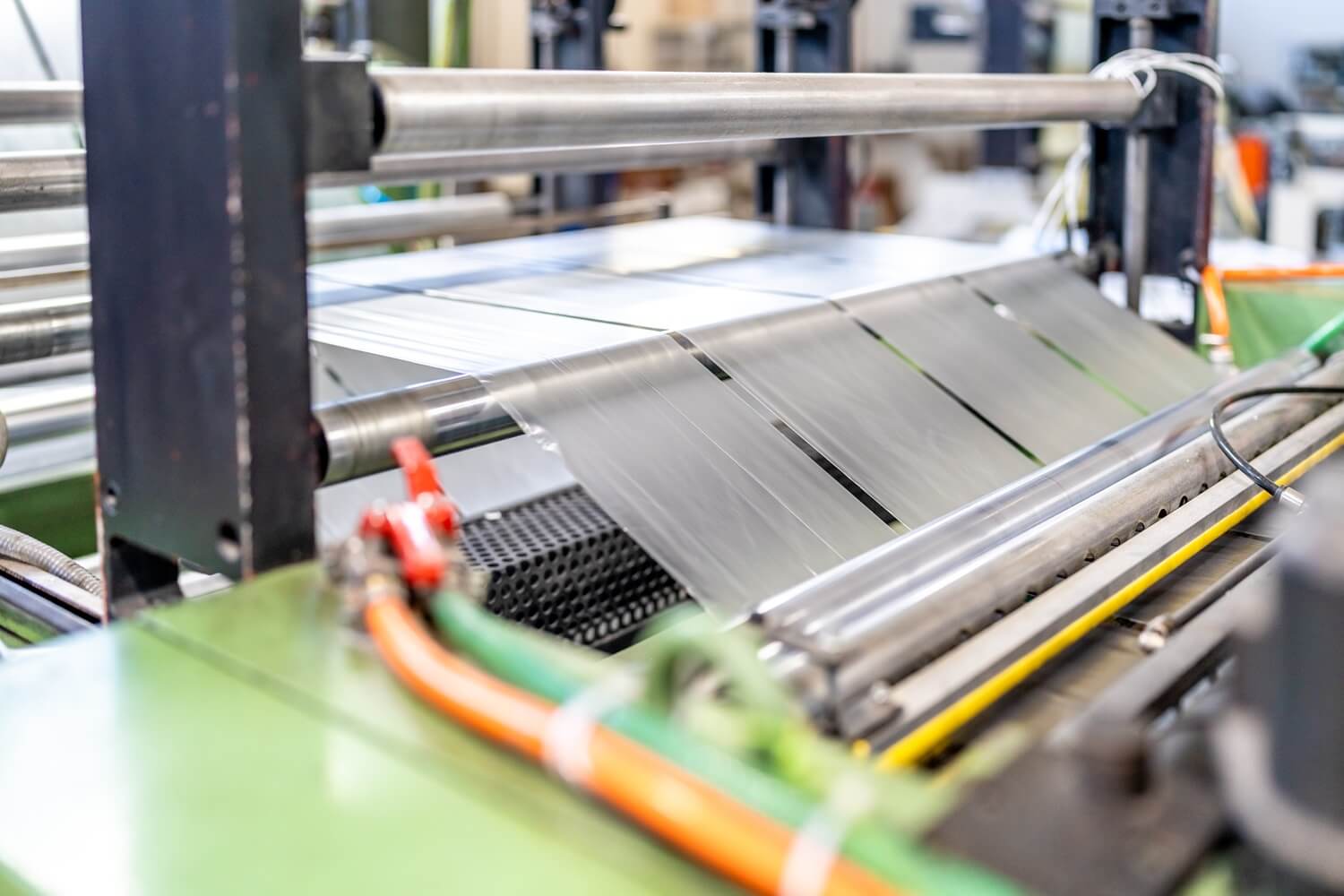 Downtime tracking
 Every stop on the line, counted and classified
Every stop is captured automatically from the PLC and classified: changeover, jam, starvation, microstop. A live Pareto shows where the shift actually went, so improvement starts at the biggest eater of capacity instead of a gut feeling.
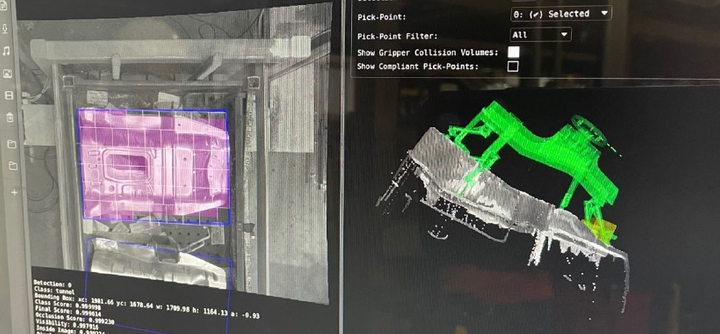 Quality early warning
 Scrap predicted before it comes off the line
Process parameters temperatures, pressures, cycle times feed a model that flags drift towards rejects while parts are still in the machine. Operators correct course instead of sorting scrap afterwards, and every intervention is logged against the batch.
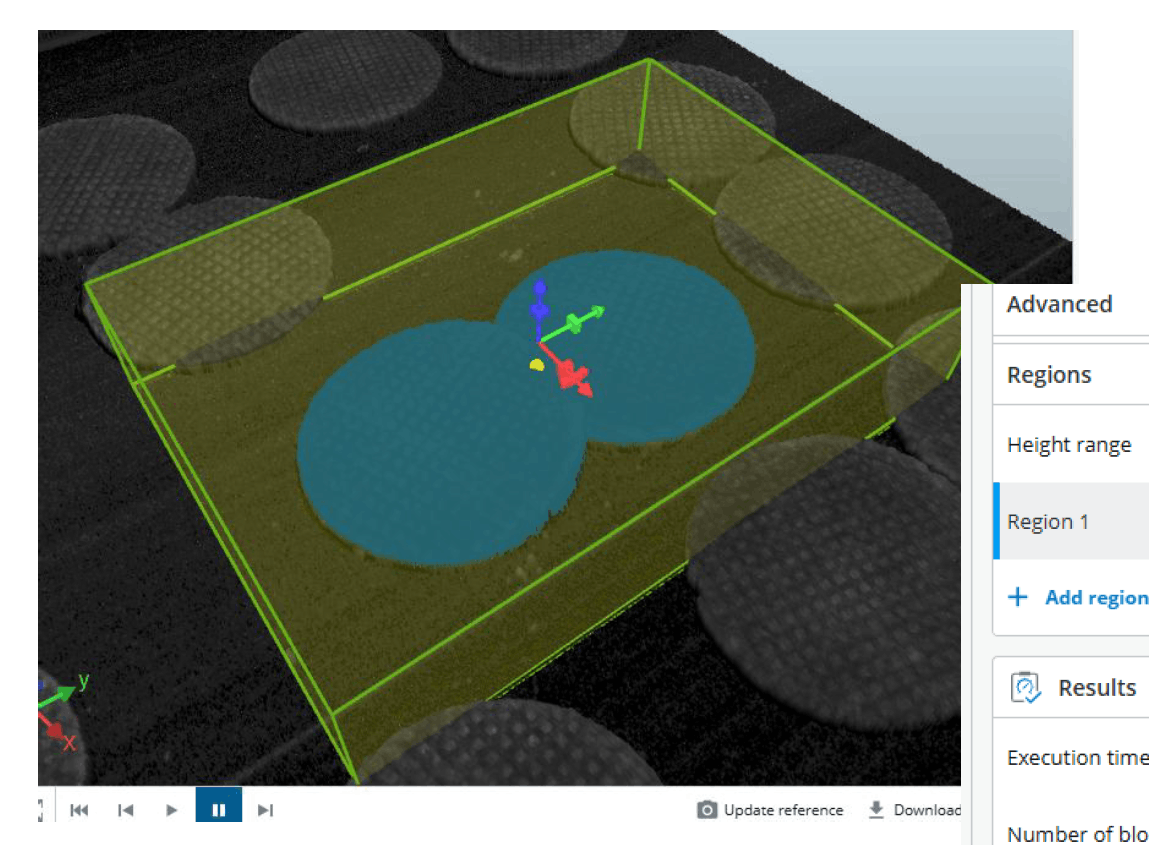 Inline quality inspection
 Every stroopwafel measured by a 3D laser camera
A 3D laser camera measures every stroopwafel on the line: diameter, thickness and shape. Deviations show up while the batch is still running, not at the sample check afterwards. All quality data logged per line and per batch.
Frequently asked questions about manufacturing digitalization
What does manufacturing digitalization mean?
Manufacturing digitalization means collecting, connecting and using production data automatically so it can support daily decisions. That can include machine data, OEE, downtime, quality, energy and maintenance. The goal is not simply to replace paper with screens, but to make information faster, more complete and more useful in context.
Do we need to replace our machines or MES?
No. MeshOS is designed to work with existing machines, PLCs and data sources. Existing ERP and MES systems can stay in place. MeshOS adds a live data layer and makes factory-floor data usable in dashboards, alerts, reports and analysis.
Can we start small?
Yes. A first project can start with one machine or production line and one practical use case, such as OEE, downtime or a registration process. Once the value is visible, the same data foundation can be expanded to other lines and modules.
Make visible what your factory already knows
Your machines already produce the data. The next step is making sure production, management and IT can use it in time. Start with the problem that costs the most today.