
Jun 15, 2026
What is machine vision? How AI automates quality control in manufacturing
What is machine vision? Discover how AI vision automates quality control in manufacturing, from label inspection to defect detection, and how to get started.
What is machine vision?
Machine vision is technology in which cameras and smart software automatically perform visual checks and measurements in a production environment. A camera captures every product, software judges the image and the line receives an immediate signal: approve, reject or adjust. Where a human inspector gets tired after a few hours, a vision system checks every single product, all day long, with the same attention.
Machine vision has existed for decades, but AI has expanded its possibilities enormously. Classic vision systems work with fixed rules and tolerances: they measure, for example, whether a hole sits exactly in the right place. AI vision learns from examples instead. The model sees hundreds of good and bad products and learns to recognise the difference by itself, including deviations you cannot capture in a rule beforehand, such as scratches, discolouration or missing parts.
Why now? AI vision has become mature and affordable
Ten years ago, visual inspection with AI was reserved for large corporations with their own research departments. That has changed. Industrial cameras have become affordable, edge computers are powerful enough to analyse images right next to the line and modern models learn from relatively small sets of examples. AI vision is now within reach of every manufacturer, including smaller companies.
At the same time, the pressure to automate is growing. Skilled workers are scarce, customers and retailers keep raising the bar on quality and traceability, and a single recall quickly costs more than a complete vision system.
What can AI vision do in a manufacturing company?
The applications are broader than many companies think. These are the most common ones:
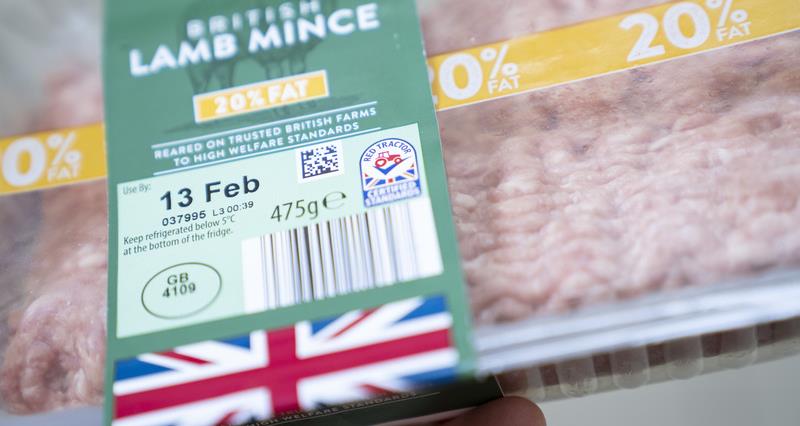
- Label inspection: does this label belong to this order and is the best before date present, correct and readable? A vision system checks every package before it leaves the line.
- Defect detection: recognising scratches, dents, cracks, discolouration or moulding defects on products and surfaces, even when every deviation looks slightly different. This is the domain of AI visual inspection: every product checked, at production speed. This is the domain of AI visual inspection: every product checked, at production speed.
- Completeness checks: verifying that an assembly is complete, that all parts are present and that everything sits in the right place.
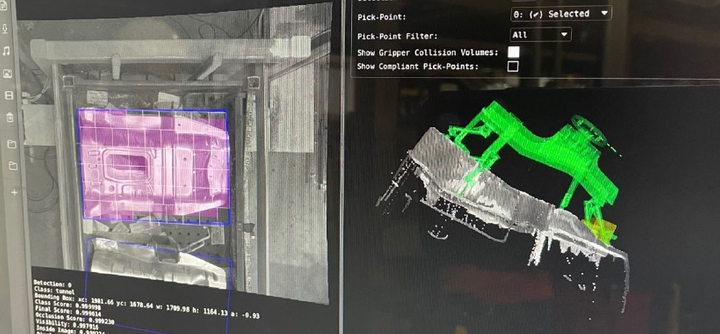
- Robot guidance: showing a robot where a product is and how it is oriented, for example with a 3D point cloud for accurate picking and placing.
- Traceability: reading codes and features and logging every check per product or batch, so you can prove exactly what was inspected when a complaint comes in.
At a food producer, for example, we installed a vision system that checks every package on the line for the correct label and a readable best before date. Deviations are intercepted before products leave the factory and every check is logged per batch. You can find more examples in our client cases.
How to approach an AI vision project
Step 1: define what is good and what is bad
Do not start with the camera, start with the check. Which deviation do you want to catch and what is it allowed to cost? Define together with operators and quality staff what a good product looks like and collect examples of deviations. The sharper the definition, the better the system.
Step 2: get the images right
A vision system is only as good as its images. The right camera, lens and lighting determine success, as does a fixed position relative to the product. A stable image makes the difference between a model that works reliably and a model that keeps doubting.
Step 3: train and test the model
Collect images of good and bad products and label them. The model is then trained and tested on images it has never seen. The balance between missed defects and false rejects is crucial: a system that is too strict throws away good product and loses the trust of the factory floor.
Step 4: integrate the system into the line
A standalone camera with a screen is not a solution yet. The vision system has to talk to the line: a signal to the PLC to eject a product, stop the line or alert an operator. This is classic industrial automation combined with AI, and it usually runs on an edge computer right next to the line.
Step 5: monitor and improve
Products, packaging and conditions change. A good vision system is therefore monitored: how often does it reject, are the results drifting and are there new variants the model does not know yet? With every improvement round, the system becomes more reliable.
Vision data connects to the rest of your factory
The biggest gains appear when vision results do not stay on an island. Link every check to the order, batch and machine in one shared data layer and you can suddenly connect quality to process data: at which temperature or cycle time do most rejects occur? Vision then becomes a source of structural improvement instead of just a gatekeeper. You can read how to use those connections to trace and remove the causes of rejects in our article on root cause analysis with production data. You can read how to build that data layer in our article on Industry 4.0 and the smart factory. A platform such as MeshOS brings vision results, machine data and batch information together in one environment.
Frequently asked questions about machine vision and AI
What is the difference between machine vision and computer vision?
Computer vision is the broad field in which computers learn to understand images. Machine vision is its industrial application: cameras and software that perform checks and measurements in a production environment and act on the line immediately.
What is the difference between classic vision and AI vision?
Classic vision works with fixed rules and tolerances and excels at exact measurements. AI vision learns from examples and therefore also recognises deviations that are hard to capture in rules, such as scratches, contamination or missing parts. In practice, the two are often combined.
Is AI vision more reliable than human inspection?
For repetitive checks, yes. A vision system judges every product with the same attention, never gets tired and records every decision. People remain essential for defining quality and judging edge cases, but the system can take over the continuous inspection work.
Does AI vision work on existing production lines?
Yes. A camera, lighting and an edge computer can almost always be fitted to an existing line, and the connection to the PLC uses standard signals and protocols. The line does not have to be replaced or shut down for it.
What does an AI vision system cost?
That depends on the application: the number of cameras, the speed of the line and the complexity of the check. Our approach is to start small: one check on one line with a measurable goal, so the business case proves itself before you scale up.
Conclusion: start with one check that really matters
AI vision is no longer a promise for the future. The technology is mature, affordable and proven in practice, from label inspection in the food industry to quality monitoring in automotive. The key is to start small: pick one check where mistakes really hurt today, automate it well and build from there.
Meshnex designs, builds and integrates AI vision solutions that work together with your existing lines and systems. Take a look at our AI visual inspection solution, contact us or read more about our approach.