

MeshOS module
Predictive maintenance starts with the data your machines already produce
Maintenance usually happens at two moments: after a machine has failed, or because the calendar says it's time again. One moment is too late, the other often too early. Predictive maintenance turns that around: you use live and historical machine data to spot deviations earlier, and step in before a fault hits production. MeshOS builds that data foundation, starting with a single machine.
Maintenance is often too late or too early
Most maintenance teams work with a mix of fixing breakdowns, fixed intervals and the gut feeling of experienced technicians. That works, but it has a built-in limitation: it's not the actual condition of the machine that decides when maintenance happens, the calendar does. And then this happens:
Research from aviation, the foundation of modern maintenance thinking (Nowlan & Heap), shows that only about 11% of failure patterns are related to age or running hours. The rest occur at random. That is exactly why a fixed maintenance calendar falls short: it only catches the wear that sticks to the schedule.
From reactive to predictive
What is predictive maintenance?
Predictive maintenance is a maintenance strategy where machine data determines when a machine or part needs attention. You don't just look at breakdowns or the calendar, but at how the machine actually develops: cycle times, alarm behavior, microstops, process parameters. In practice, maintenance matures in steps, and every step already means fewer surprises.
You don't have to climb those steps in one go. The data foundation is the same for every step, and you build it while production simply keeps running.
The signals are already in your machines
Which data is usable differs per machine and process. But almost every factory has more in its PLCs and controls than it uses. So MeshOS starts with what is there; only when an important signal is missing do we consider whether an extra sensor adds value.
Signals that can announce a failure:
A single deviation may mean nothing. The value appears when you can compare the same signals over weeks and months, linked to machine, order and shift.
- Cycle times that creep up or start to scatter.
- Alarms and fault codes that keep returning on the same machine.
- Microstops that occur more often week after week.
- Process parameters that slowly drift away from their normal value.
- Changes in speed, load or energy consumption.
- Quality deviations that coincide with changing machine behavior.
Why many predictive maintenance projects stall
A predictive model is only as good as the data it runs on. And that is where it usually goes wrong: the data exists, but it sits scattered across PLCs, loose sensors, alarm lists, spreadsheets and the maintenance system. Without context, an analysis knows that a temperature rose, but not which machine, order or fault it belonged to.
What that looks like:
That is why predictive maintenance does not start with an AI model. First get the data right, then predict.
- Every source keeps its own list, nobody has the complete picture.
- Alarm history and maintenance reports are not linked to machine data.
- What happened before a breakdown can no longer be reconstructed afterwards.
- Patterns across shifts, batches and weeks stay invisible.
- A model on unstructured data mostly produces false alerts, and then the team stops looking.
- The project turns into an IT exercise instead of a maintenance improvement.
How MeshOS builds the data foundation under your maintenance
MeshOS is the live data layer between your machines and the people who run the factory. Meshnex installs a pre-configured edge device and connects the available PLCs and data sources, read-only if you want: MeshOS reads along, it doesn't control anything.
From that moment on:
Predictive maintenance stops being a separate AI project: it becomes the next step on the same data you already use for production insight every day.
- Every measurement gets context: machine, line, order, event and time.
- Live dashboards show machine status, process values and alarms in one place.
- You see what normal looks like for a machine, and when its behavior starts to deviate.
- After a fault, you look back at what happened before, during and after.
- Every shift adds to the history of normal behavior, deviations and faults.
- Predictive analytics builds on that history: anomalies, asset condition and maintenance risks become easier to assess over time.
What it's really about: seeing deviations before they become downtime
The gain of predictive maintenance is not the prediction itself. It is the time between the first deviating signal and the moment production gets hit: often weeks for wear, sometimes days. In that window, a breakdown changes from a surprise into a job you can plan.
That shifts maintenance from firefighting to planning. And every hour you see a fault coming earlier is an hour more to do something about it.
For every role
The same machine picture, for every role
Everyone looks at maintenance differently. MeshOS uses the same data foundation, but makes it usable for everyone who works with the machines.
Works with the machines you already have
Predictive maintenance does not require a factory full of new sensors. MeshOS connects to existing PLCs, machines and data sources; only where an important signal is missing do we decide together whether an extra sensor is worth the measurement. Where the data lands is up to you:
The same data foundation and structure stay available, whichever form you choose.
Honest about predictive maintenance: what you should know
Predictive maintenance is not a crystal ball. Three limits belong in an honest story, and they shape how we set up a project.
That is why we don't promise exact failure predictions on day one. We first make visible what your machines are doing; everything after that builds on it.
Start with one machine you want to understand better
You don't have to roll out predictive maintenance factory-wide. Pick one machine with recurring faults or maintenance questions and use it to get the data right. We connect the first machine free of charge, no strings attached.
Step 1: we connect the machine
Meshnex installs the edge device and connects MeshOS to the available PLCs, sensors and data sources. Read-only: production simply keeps running.
Step 2: the first live data appears
Machine status, process values and alarms in one place. In most situations within 48 hours of installation.
Step 3: the history builds up
Every shift adds data. Trends, recurring deviations and changing machine behavior become clearer week after week.
Step 4: you decide which analyses add value
Based on the data you have built, you decide which condition-based or predictive analyses make sense, and where expanding to more machines pays off.
Proof in practice
Predictive maintenance in the field
Real machines, real faults, seen earlier.
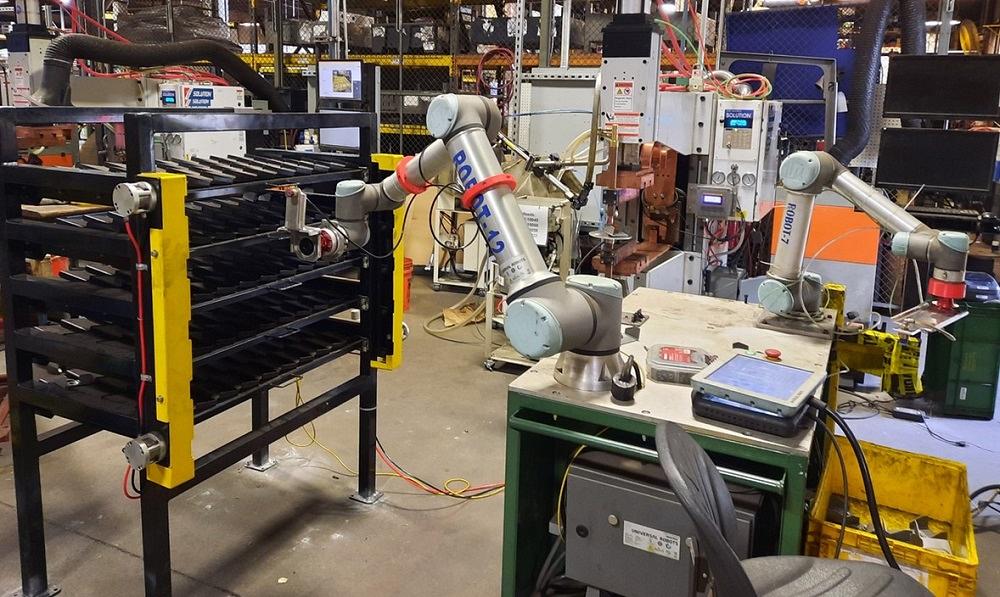 Predictive maintenance
 Failures flagged weeks before the breakdown
Vibration, temperature and current from three critical machines feed an anomaly model that flags deviations weeks before failure. Maintenance planned around production instead of around breakdowns starting with the assets that hurt most, not a full-plant rollout.
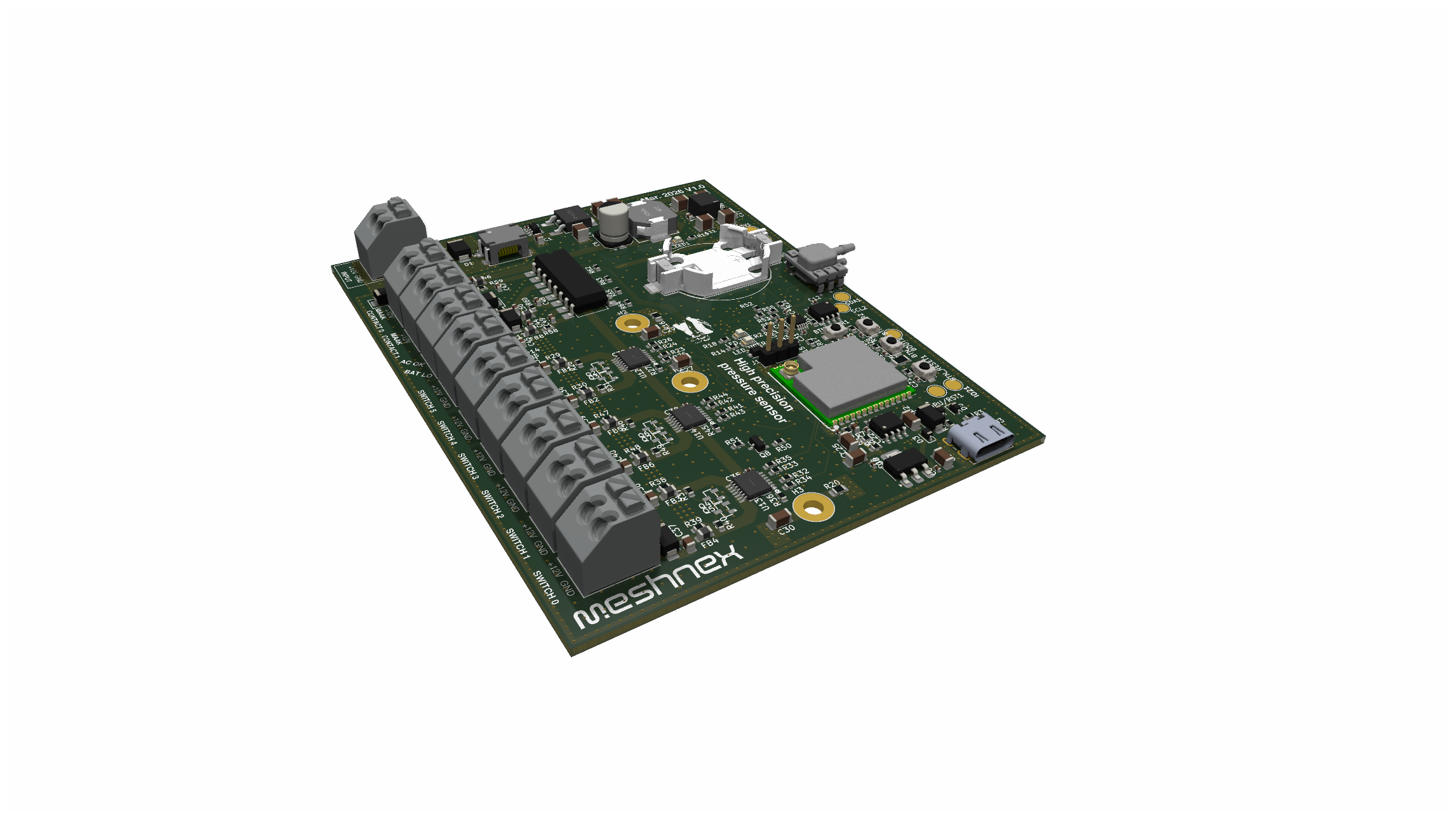 Pressure monitoring and control
 Pressure monitored and logged
A custom monitoring device that measures and logs pressure continuously. Deviations trigger an alert before they become a problem with a complete measurement history for analysis and reporting.
 Downtime tracking
 Every stop on the line, counted and classified
Every stop is captured automatically from the PLC and classified: changeover, jam, starvation, microstop. A live Pareto shows where the shift actually went, so improvement starts at the biggest eater of capacity instead of a gut feeling.
Frequently asked questions about predictive maintenance
What is predictive maintenance?
Predictive maintenance is a maintenance strategy that uses live and historical machine data to recognize changes and patterns that point to a growing risk of failure. The goal: plan maintenance before a problem leads to unplanned downtime, instead of reacting after the machine has failed.
What is the difference between preventive and predictive maintenance?
Preventive maintenance follows a fixed schedule: every month, every quarter or after a number of running hours, regardless of the machine's condition. Predictive maintenance looks at how the machine actually develops in the data. You replace fewer parts that are still good, and you miss fewer failures that don't stick to the schedule.
What is condition-based maintenance?
In condition-based maintenance, the current state of the machine determines when maintenance is needed, based on available signals, alarms and trends. Predictive maintenance goes one step further: it also uses history to recognize patterns and see risks coming earlier.
Does MeshOS already predict exactly when a machine will fail?
No. MeshOS focuses first on collecting, structuring and making reliable machine data visible: that alone often delivers usable insight into deviations and recurring faults within weeks. As enough history builds up, models can assess anomalies, asset condition and maintenance risks better and better.
What data is needed for predictive maintenance?
That differs per machine and process. Think of alarm history, cycle times, microstops, speed, temperature and other process values, plus the moments when faults occurred. During the connection we check which signals your PLCs already provide and which of them say something about the machine's condition.
Do we need new sensors?
Not always. Many machines and PLCs already contain usable signals; MeshOS starts with those existing sources. Only when an important signal is missing, vibration on a critical bearing for example, do we consider whether an extra sensor is worth the measurement.
Does predictive maintenance work on existing machines?
Yes. MeshOS was built precisely to connect existing machines, PLCs and data sources, including older ones. No machine replacement is needed to start building the data.
Can we start with one machine?
Yes, and we even recommend it. Pick a machine with recurring faults or maintenance questions: that is where the data proves itself fastest. We connect the first machine free of charge, and after that you decide whether expanding makes sense.
How quickly do we see the first live machine data?
In most situations within 48 hours of on-site installation. The exact lead time depends on the machine, the available data sources and the network. Reliable prediction then mostly takes history: every shift makes the dataset more valuable.
Does MeshOS control our machines?
Not by default. MeshOS is connected read-only and then only reads data from machines and PLCs; control of your production process stays where it is. For your IT that means: watching along, not intervening.
What does predictive maintenance cost?
We connect the first machine free of charge, no strings attached, so you see with your own data what it delivers. After that, the investment depends on the number of machines, the analyses you want and the deployment form. Expansion happens step by step, so cost follows proven result.
Build the data today that makes maintenance smarter tomorrow
Predictive maintenance doesn't start with an algorithm. It starts with knowing what your machines are doing, what normal behavior looks like and which deviations precede failures. Connect one machine and discover which maintenance signals are already hiding in your data.