

MeshOS module
AI shift handover: every shift handed over complete
Five minutes of overlap, a full logbook and a head full of details: that is what the continuity of your factory hangs on. What the night shift doesn't pass on, the morning crew digs up all over again. MeshOS already records every stop, alarm and batch while the shift runs; AI writes the handover report from it and the operator adds what the data can't see. Every crew starts with the complete story.
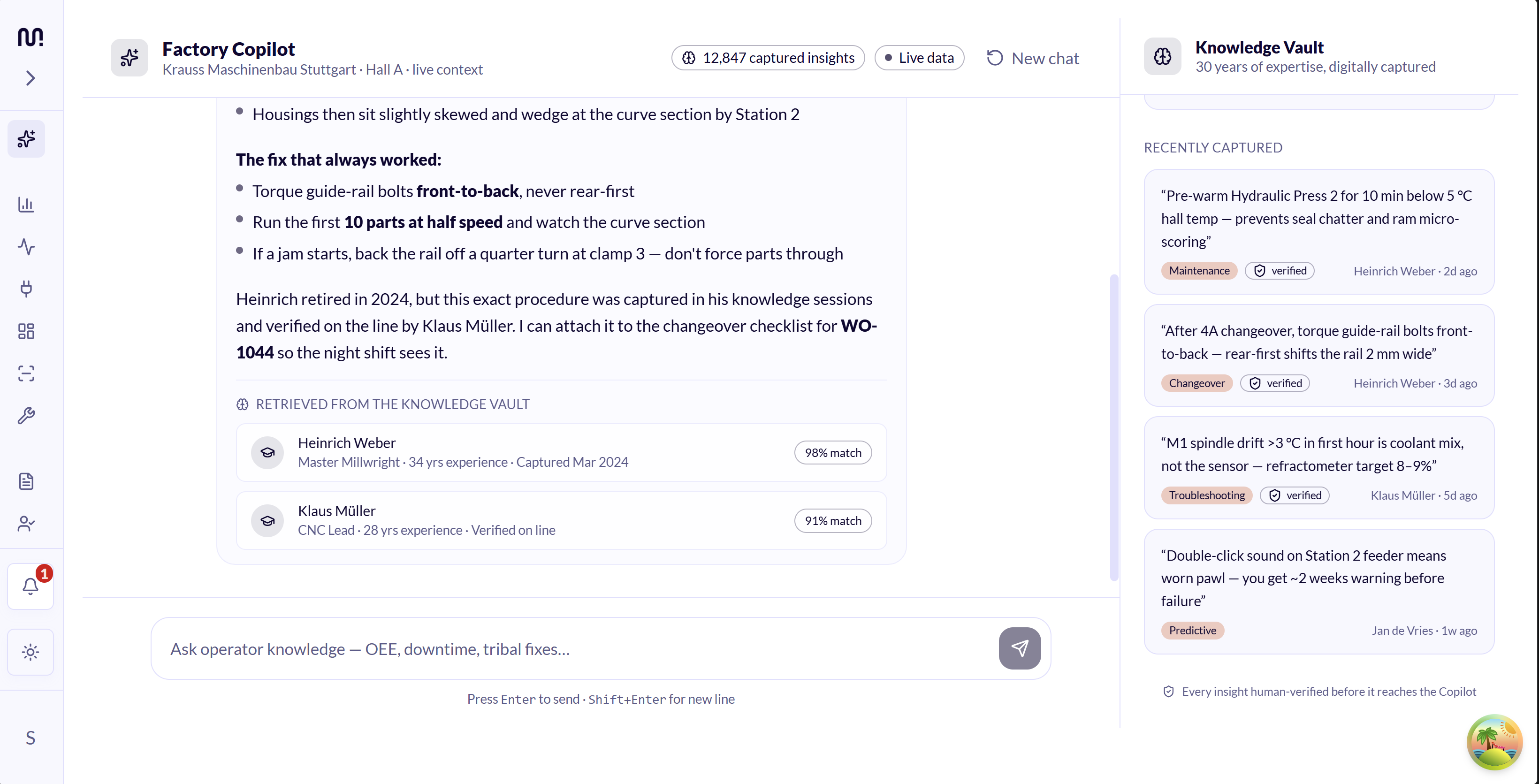
The handover depends on who happens to be standing there
In most factories the shift handover is a combination of a short conversation, a logbook and good intentions. That works on a quiet day. But right after a rough shift, when there is the most to hand over, there is the least time and energy to do it well.
The most expensive lesson about handovers comes from industry itself. In the 1988 Piper Alpha disaster, a pump that was down for maintenance was restarted after the shift change: the note with the warning never reached the incoming crew. Ever since, the UK safety authority HSE has called the handover one of the most vulnerable moments in continuous production, and the guidance is clear: verbal and written, with time and structure.
From conversation to system
What is an AI shift handover?
An AI shift handover, also called a digital shift handover, is a handover report that isn't typed up afterwards but built from the machine data of the shift itself. AI summarizes the events, the operator adds context. Most factories grow towards it in steps:
The difference is not the form, it's the source: a handover built from machine data cannot forget anything the machines have recorded.
What the handover report contains
The report is built from what MeshOS already recorded during the shift, completed with the operator's notes. No typing afterwards: the shift itself is the source.
What the next crew reads:
The next crew reads in two minutes what happened over eight hours. And the morning meeting starts from the same facts, instead of three reconstructions of the same night.
- Every stop with duration and reason: faults, changeovers, microstops.
- OEE and output of the shift, next to the shifts before it.
- Alarms and deviations that need attention, with machine and timestamp.
- Which orders and batches ran and how far they got.
- Quality deviations and what was done about them.
- The operator's notes: what has been tried, what the next shift needs to know.
What a poor handover costs your factory
A handover that runs on memory and good intentions costs more than some irritation at the shift change. The damage shows up in the days after:
Not because people are careless, but because eight hours of production don't fit into five minutes and half a page.
- The same fault is diagnosed three times across three shifts.
- A creeping deviation goes unnoticed, because each crew only sees its own piece.
- Agreements with maintenance evaporate between two shifts.
- New operators miss the context experienced colleagues only pass on verbally.
- With complaints or audits, there is no way to find out what happened that night.
- Management steers on yesterday's gut feeling instead of today's numbers.
How the AI shift handover works during the shift
MeshOS is the live data layer under your factory: stops, alarms, orders and process values are recorded while the shift runs. The handover is an outcome of that, not an extra task on top of the work.
Here is how it goes:
Handing over becomes a five-minute check instead of a half-hour reconstruction. And the quality no longer depends on how hectic the last hours were.
- Events are recorded automatically with machine, time and context.
- The operator adds notes in the moment, in a few words, not at the shift change.
- At the end of the shift, AI writes the draft report: events, losses, points of attention.
- The crew reviews and completes it: it stays the crew's handover, not the system's.
- The next shift and the morning meeting read the same report, with the details one click deep.
- Shift and daily reports come from the same data, without extra typing.
What it's really about: nothing lost between two shifts anymore
A factory that runs shifts is only as good as the handover between them. The report is not the goal; the goal is that the next shift continues where the previous one stopped, at every single change.
And because every handover is kept, a searchable history grows: what did the previous crew do with this alarm, what was going on with this line last month. Today's handover is next quarter's reference.
For every role
One handover, for every role
The handover touches everyone who works with the factory, from the floor to the office. MeshOS builds on the same data, presented the way each role needs it.
Runs on the data layer that is already there
The AI shift handover is a MeshOS module: it uses the machine data MeshOS already collects and your team's notes. One connected machine is enough to start. Where the data lands is up to you:
No MeshOS yet? We connect the first machine free of charge, no strings attached. The handover then grows with whatever is connected.
Honest about AI handovers: this stays human work
An AI report is a strong backbone for the handover, not a replacement for the conversation. Three limits shape how we set it up.
The success of this module isn't measured by how polished the report looks, but by how quickly the next shift is up to speed.
A handover that writes itself, in about two weeks
No migration project: the module runs on the data MeshOS already collects. No machine connected yet? Then that is step one, free of charge and without obligation.
Step 1: we connect the data
MeshOS connects to the machines and sources that tell the story of the shift: stops, alarms, orders, counters. Read-only, production doesn't notice a thing.
Step 2: we set up the report
Together with shift leaders and operators we decide what belongs in the handover: which events, which order, which points of attention.
Step 3: the first shifts run alongside
AI writes the report, the crew reviews and completes it. After a few changes it is clear what is still missing and what is noise.
Step 4: the handover is the standard
Every shift closes with the same report, the morning meeting starts with it and the history grows by itself: searchable per machine, line and shift.
Proof in practice
Reports that come from data, in the field
Real factories where reports come from data instead of typing.
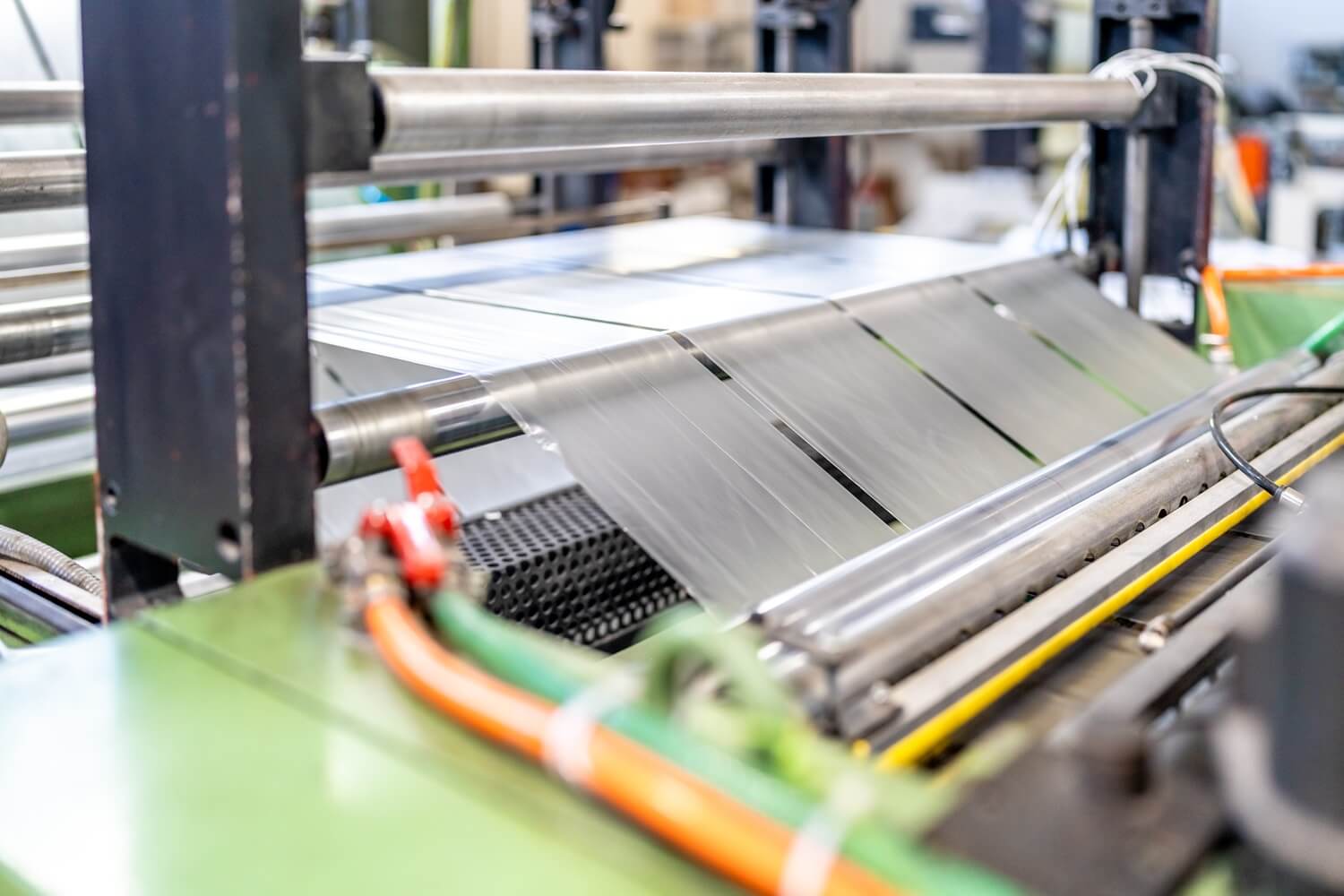 Downtime tracking
 Every stop on the line, counted and classified
Every stop is captured automatically from the PLC and classified: changeover, jam, starvation, microstop. A live Pareto shows where the shift actually went, so improvement starts at the biggest eater of capacity instead of a gut feeling.
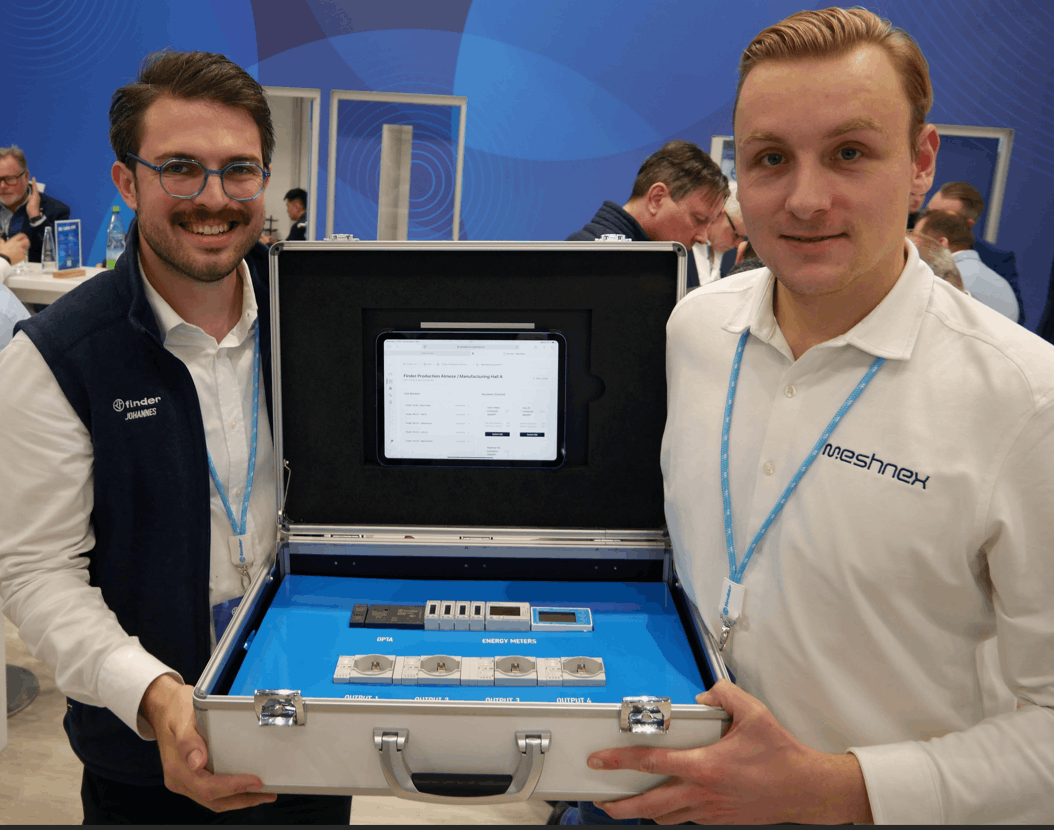 Energy monitoring
 Energy data that writes its own audit report
Sub-metering on the main consumers, one dashboard with kWh per line and per batch, and audit-ready ISO 50001 and CSRD reports generated from live data instead of a yearly spreadsheet scramble. The auditor's letter stopped being a fire drill.
Knowledge capture Thirty years of troubleshooting knowledge, made searchable
An AI copilot trained on years of alarm logs, repair notes and manuals answers troubleshooting questions the way the veteran technician would: machine, symptom, fix. The knowledge stays when the person who carried it retires.
Frequently asked questions about the AI shift handover
What is an AI shift handover?
An AI shift handover, also called a digital shift handover, is a handover report built automatically from the machine data of the shift: stops, alarms, orders, output and quality deviations, completed with the operator's notes. AI summarizes the shift into a readable report for the next crew and the morning meeting.
How is this different from a digital logbook?
A digital logbook is an empty page the operator has to fill, usually at the end of a long shift. With the AI shift handover, the report is already built from what the machines recorded; the operator only reviews and adds context. The difference is the source: machine data forgets nothing, not even on a hectic day.
Is what the AI writes correct?
The report builds exclusively on recorded events and notes: every line traces back to its source, the AI summarizes and doesn't make things up. On top of that, the crew reviews the report before it is handed over. If something isn't in the data, it won't be in the report; that is why the operator's notes stay important.
Do operators still have to type?
Much less. The events themselves are recorded automatically; what remains are short notes in the moment, a few words each. The summarizing, structuring and writing is done by the AI. Reviewing and completing takes a few minutes at the end of the shift.
Does this work with our machines and systems?
Yes. The module runs on MeshOS, which connects read-only to existing machines, PLCs and data sources, including older ones. No machine needs replacing; one connected machine is enough to get the first reports running.
Can we keep the structure of our current handover?
Yes, it is usually the starting point. We set up the report around the points you already hand over, in the order your shift leaders are used to, and complete them with the machine data that was missing until now.
Does this replace the handover conversation?
No. Safety guidance, such as that of the UK HSE, prescribes a verbal and written handover for good reason. The report doesn't replace the conversation, it makes sure it is about the right things: the five minutes at the change go to the points of attention, not to reconstructing the shift.
What is in the shift report?
By default: stops with duration and reason, OEE and output, alarms and deviations, orders and batches that ran, quality deviations and the crew's notes. What exactly belongs in it and in which order is set up per factory; each line or department can have its own report.
How quickly can the AI shift handover go live?
In many cases within about 2 weeks once the machine data is available: setting up, running alongside for a few shifts and adjusting. If no machine is connected yet, connecting comes on top of that; first live data is visible within 48 hours in most situations.
Does MeshOS control our machines?
Not by default. MeshOS is connected read-only and only reads data from machines and PLCs; control of your production process stays where it is. The handover reads along with the factory, it doesn't intervene anywhere.
What does the AI shift handover cost?
That depends on the number of lines and the reports you want. So we start small: we connect one machine free of charge, no strings attached, and the module is up in about two weeks. You see from your own shifts what it delivers before you roll it out wider.
Start every shift with the complete story
Today's events are tomorrow's report. Connect one machine, let a few shifts run alongside and see for yourself what changes when the handover writes itself.